Disclosure: This article contains affiliate links. As an Amazon Associate and partner with other affiliate programs, we earn from qualifying purchases at no additional cost to you. We only recommend products we genuinely believe in. Learn more.
Tokyo Travel Guide 2026: When to Go, What to Do & How to Get Around
Tokyo is unlike any other city on Earth. It sits at the heart of one of the world’s largest metropolitan areas — roughly 37 million people by United Nations estimates — yet it feels organized, quiet, and extraordinarily safe. Violent crime rates are among the lowest of any major city. Trains run to the second. The food is some of the best you’ll ever eat in your life.
This guide is written as a first-trip desk. The two decisions that shape a Tokyo trip more than any piece of gear are how you move and where you base — so transit and neighborhoods get the deep treatment here, while packing and equipment have their own dedicated guides (linked at the end). Whether you’re visiting for cherry blossom season, autumn leaves, or anytime in between, Tokyo delivers.
When to Visit Tokyo
| Season | Months | Weather | What’s Happening |
|---|---|---|---|
| Spring ⭐⭐⭐⭐⭐ | Mar–May | 10–22°C | Cherry blossoms (late Mar–early Apr) |
| Early Summer | Jun | 20–27°C | Green foliage, pre-rain season |
| Rainy Season | Late Jun–Jul | 23–29°C | Humid, frequent rain — avoid |
| Summer | Aug | 28–35°C+ | Hot, humid — festivals, quieter |
| Autumn ⭐⭐⭐⭐⭐ | Sep–Nov | 12–24°C | Fall foliage, cooler weather |
| Winter | Dec–Feb | 2–12°C | Cool, dry, clear skies, fewer tourists |
Best overall time: Late March–early April for cherry blossoms (book 12+ months ahead — accommodation sells out). Second-best: November for autumn foliage with fewer crowds.
Two domestic travel peaks to plan around: Golden Week (late April–early May), when hotels fill and prices spike, and the New Year holidays (roughly Dec 29–Jan 3), when many independent shops and restaurants close even as shrines get busy. First-timers are usually happiest just outside these windows.
Getting to Tokyo
From North America: 10–14 hours direct. United, ANA, and JAL fly direct from NYC, LA, Chicago, and SFO. From Europe: 11–13 hours; British Airways (Heathrow), Lufthansa, ANA, and JAL operate direct services. Schedules shift seasonally — the Japan National Tourism Organization maintains current access information, and our guide to finding cheap flights covers the booking strategies that matter most. Landing in the morning (local time) and forcing yourself into daylight is the single best jet-lag tool — see How to Avoid Jet Lag.
Arriving at Tokyo’s airports:
- Narita (NRT): 60–90 min from central Tokyo. The Narita Express (N’EX) runs to Tokyo, Shinjuku, and Shibuya stations in about an hour, roughly ¥3,000 one way. The Keisei Skyliner to Ueno is the fastest option at around 40 minutes. Airport limousine buses and the Keisei Access Rapid cost less and take longer.
- Haneda (HND): 20–45 min from the city center. The Keikyu Line to Shinagawa and the Tokyo Monorail to Hamamatsucho each cost a few hundred yen. If the airfare is close, fly into Haneda — it is simply closer and cheaper to escape.
Getting Around Tokyo
One thing to understand before anything else: Tokyo’s rail network is run by separate companies — JR East (the surface rail, including the Yamanote loop line), Tokyo Metro and Toei (the two subway operators), and private railways like Odakyu, Keikyu, Keisei, and Tobu. Your IC card works on all of them. The practical consequence: a journey that crosses between operators is billed as separate fares, which is why a “short” cross-town trip can cost more than a long one on a single line. Route apps handle this automatically. Both Tokyo Metro and JR East publish English timetables, fares, and network maps.
IC Card (Suica or Pasmo) — Essential
Get an IC card on day one. Options, easiest first:
- Mobile Suica in Apple Wallet — add it at your phone’s wallet app before you even land; top-up works with many overseas cards. If registration fails, fall back to a physical card.
- Welcome Suica — a tourist version sold at airport counters, valid for a short fixed window, with no deposit to reclaim.
- Regular Suica or Pasmo — from machines at any major station; a small refundable deposit applies.
The card works on virtually all trains, buses, convenience stores, and vending machines. Load it, tap in, tap out. You’ll never need to buy individual paper tickets.
Typical one-way IC fares inside the city:
| From | To | Method | Time | Typical IC Fare |
|---|---|---|---|---|
| Shinjuku | Shibuya | Yamanote Line | 6 min | ~¥160 |
| Shinjuku | Akihabara | Chuo/Sobu Line | 25 min | ~¥220 |
| Shibuya | Harajuku | Yamanote Line | 2 min | ~¥160 |
| Tokyo Station | Asakusa | Ginza Metro | 25 min | ~¥210 |
Fares are distance- and operator-based and get revised periodically — treat these as planning figures and check current fares on the Tokokyo Metro and JR East sites. For dense sightseeing days, the Tokyo Subway Ticket (24/48/72 hours, roughly ¥800/¥1,200/¥1,500 at the time of writing) covers both subway operators’ unlimited rides and is sold to foreign passport holders at airports and select city counters — it beats per-ride IC fares if you’re hopping between four or five neighborhoods a day.
Rush hour and last trains. Weekday mornings between roughly 7:30 and 9:00, the Chuo Rapid and Yamanote lines run at standing-room crush — do not attempt them with luggage. Trains thin out after 11 p.m.; last departures roll out between about midnight and 12:30 a.m., and service resumes around 4:30–5:00 a.m. That late-night gap is what taxis are for.
Wayfinding. Every line has a color and a letter code (Ginza Line is G, stations carry numbers like G-16), platforms are numbered, and station exits are numbered too — meeting points in Tokyo are given as exits (“Marunouchi Exit”, “Exit A3”). Google Maps handles Tokyo transit very well, including platform and exit suggestions; download offline maps before you land.
Luggage. Commuter trains have no luggage racks and no reservations. The local solution is takkyubin luggage forwarding: counters for Yamato Transport and JAL ABC at both airports will ship your suitcase to your hotel, typically arriving the next day for somewhere around ¥2,000–3,000 per bag. Keep an overnight bag with you and the transit system stays pleasant for everyone — including you. Traveling carry-on only sidesteps the whole question.
JR Pass
The national Japan Rail Pass was repriced sharply upward in October 2023 — a 7-day ordinary pass now costs ¥50,000 (see the official JR Pass site for current prices). The honest first-trip math: a round-trip Shinkansen between Tokyo and Kyoto costs less than a 7-day pass, so the pass only pays for itself if you’re stringing together long legs — Kyoto plus Osaka plus Hiroshima, or a run north to Tohoku. If you’re based in Tokyo with maybe one Kyoto overnight, skip it and ride with your IC card. Two catches worth knowing: nationwide passholders can’t board the fastest Nozomi/Mizuho trains without a supplement, and regional passes (such as the JR EAST passes) can cover specific chunks of the country for much less — check whether one matches your itinerary before buying the national one.
Taxis
Expensive but spotless and honest (flag-fall is roughly ¥500). Use them for late-night trips when trains stop. The GO app (formerly JapanTaxi) and DiDi both accept non-Japanese credit cards, and hotel staff will happily call a cab for you.
Best Neighborhoods
Where you base changes the texture of the whole trip. Quick desk for a first visit:
| You want | Base in | Know this |
|---|---|---|
| Maximum connectivity, nightlife, everything on the doorstep | Shinjuku | One of the world’s busiest stations — navigate by exit number |
| Youth fashion, shopping, creative energy | Shibuya | 6 min from Shinjuku on the Yamanote loop |
| Traditional atmosphere, lower rates, quieter nights | Asakusa | ~40 min by train to Shinjuku/Shibuya |
| Museum-park calm, budget hotels, day-trip junction | Ueno | Skyliner, Tobu, and Keisei lines all terminate here |
| Anime, gaming, electronics culture | Akihabara | Business hotels often drop rates on weekends |
Shinjuku
Tokyo’s entertainment capital. The east side has Kabukicho (the famous entertainment district), department stores, and Omoide Yokocho (“Memory Lane”) — a tiny alley of yakitori restaurants. The west side has skyscraper offices and the free Tokyo Metropolitan Government Building observation deck; go at sunset for the transition to city lights. Base here if you want every train line at your door and don’t mind noise; choose a hotel a few stops west if you’re a light sleeper.
Shibuya
Home to the world’s busiest pedestrian crossing. Above the crossing: Hachiko Square (where everyone photographs the famous dog statue), the Shibuya Sky observation deck (book online days ahead — sunset slots sell out first), and youth fashion shopping that spills into backstreets like Ura-Harajuku. Base here if you want the city at its most contemporary.
Asakusa
Old Tokyo. Senso-ji temple — Tokyo’s oldest Buddhist temple — is the must-visit landmark. The surrounding Nakamise shopping street sells traditional sweets and souvenirs, and the streets around the temple feel like a different era. The Ginza subway line runs straight to Shibuya in about 40 minutes with no transfer, and Tokyo Skytree is a pleasant walk across the river. Base here if you want atmosphere and gentler prices in exchange for a longer ride west.
Harajuku
Takeshita Street: wild teenage street fashion. Omotesando: Tokyo’s version of Fifth Avenue — high fashion, flagship stores, and the beautiful zelkova-lined boulevard. Meiji Shrine and Yoyogi Park sit right behind the station, an easy contrast of sacred forest and teen culture within five minutes’ walk. Most visitors day-trip in rather than stay — the neighborhood is small and hotel options are thin.
Akihabara
Electronics, anime, manga, and gaming culture. Even if you’re not an otaku, the energy is fascinating and authentic — multi-floor arcades, specialist shops, and maid cafés operate at full volume on the Chuo/Sobu line, a straight shot from Shinjuku. Base here if the pilgrimage is the point; note that business hotels in the area are often cheaper on weekends when the office crowd leaves.
Yanaka
Old-school Tokyo neighborhood that survived WWII bombing — traditional wooden houses, small shrines, independent shops, and cats everywhere. Go on a Sunday for the slow weekend market feel. Transit tip for departure day: Yanaka’s station, Nippori, is on the Yamanote loop and is the Keisei Skyliner stop for Narita airport, so a last night in this neighborhood makes an easy exit. For more corners like it, see our piece on hidden gems in Tokyo most tourists miss.
Ueno
Park, museums, and machines for getting places. Ueno Park holds the Tokyo National Museum, National Museum of Western Art, and a zoo; Ameyoko market street runs beside the station; and the transit desk here is unmatched for excursions — Tobu line direct toward Nikko, Keisei line to Narita, and the Skyliner to the airport. Budget hotel clusters ring the station, and rates soften on weekends. Base here if your trip is museums plus day trips rather than nightlife.
Must-See Attractions
| Attraction | Neighborhood | Cost | Notes |
|---|---|---|---|
| Senso-ji Temple | Asakusa | Free | Open 24/7. Best at dawn |
| Shibuya Crossing | Shibuya | Free | Go at rush hour |
| Meiji Shrine | Harajuku | Free | Peaceful forested walk |
| TeamLab Planets | Toyosu | ~¥3,000–4,000 | Book online weeks ahead |
| Tokyo Skytree | near Asakusa | from ~¥2,000 | Higher decks cost more |
| Shinjuku Gyoen | Shinjuku | ¥500 | Best cherry blossom garden |
| Tsukiji Outer Market | Tsukiji | Free entry | Best sushi breakfast; many stalls close Sun & Wed |
TeamLab now runs two Tokyo installations — Planets (Toyosu) and Borderless (Azabudai Hills) — and both use timed advance tickets that sell out weeks ahead in high season. Shibuya Sky and the Skytree decks follow the same rule: book the time slot online, not on the door.
Food: What to Eat in Tokyo
Tokyo has for years held more Michelin stars than nearly any other city — see the Michelin Guide’s Tokyo selection for the restaurant-level proof. But you don’t need a reservation at a starred room to eat extraordinarily.
Must-eat:
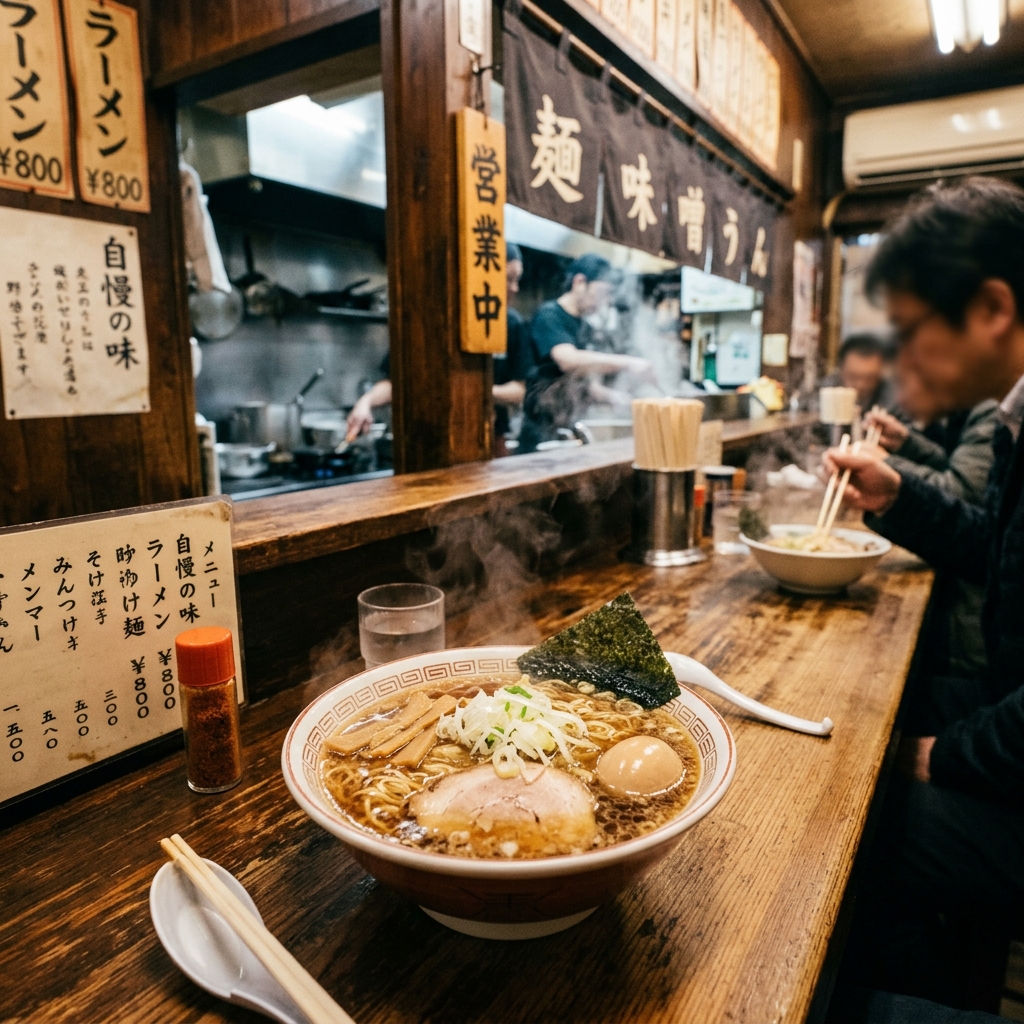
- Ramen: Every region has its style. Tokyo-style is soy-based, lighter broth. Try Ichiran for the solo-booth experience.
- Sushi: Affordable at standing sushi bars and conveyor-belt (kaiten-zushi) shops — typically ¥1,000–2,500 for a full meal.
- Yakitori: Grilled chicken skewers in Omoide Yokocho (Shinjuku) or under the train tracks at Yurakucho.
- Tempura: Among the best in the world. Try Tempura Kondo (reservation required) or a department-store basement restaurant for a fraction of the price.
- Convenience store food: 7-Eleven, FamilyMart, and Lawson in Japan sell genuinely good food — onigiri, sandwiches, hot snacks, matcha pastries. This is not a compromise; it’s a Tokyo institution.
Small restaurants and yakitori alleys are still frequently cash-only — see the FAQ below on how much cash to carry.
Day Trips from Tokyo
| Destination | Travel Time | Go For |
|---|---|---|
| Nikko | 2 hours (Tobu line from Asakusa or JR) | Elaborate shrines, forested mountain setting |
| Kamakura | 1 hour (JR Yokosuka line) | Giant Buddha, Zen temples, beach town |
| Hakone | 1.5 hours (Odakyu Romancecar or Shinkansen to Odawara) | Mt. Fuji views, onsen (hot springs), ryokan |
| Kyoto | 2h15m by fastest Nozomi Shinkansen (slower on pass-eligible trains) | Traditional Japan, geisha districts, temples |
Nikko and Narita both start from the Keisei/Tobu side of the map (Asakusa or Ueno), which is one reason to base on that side of the city if day trips are your priority. For what all of this costs once you’re out of the hotel, our Japan on a Budget guide has the full breakdown.
Budget Guide
| Category | Budget | Mid-Range | Splurge |
|---|---|---|---|
| Accommodation/night | $35–60 (hostel/capsule) | $100–200 (hotel) | $300–1,000+ (ryokan) |
| Meals/day | $20–30 | $40–60 | $100+ |
| Transport/day | $8–12 | $12–20 | Taxi-dependent |
| Attractions | $0–15 | $20–50 | TeamLab + Skytree |
Total daily budget: $65–100 (budget traveler) to $200+ (mid-range). Treat these as planning ranges, not quotes — our travel budget calculator lets you rebuild them for your own trip length and style. The same first-time-transit planning style travels well: public transport hacks for first-time London visitors covers the Oyster-and-Zone system the same way this page covers IC cards.
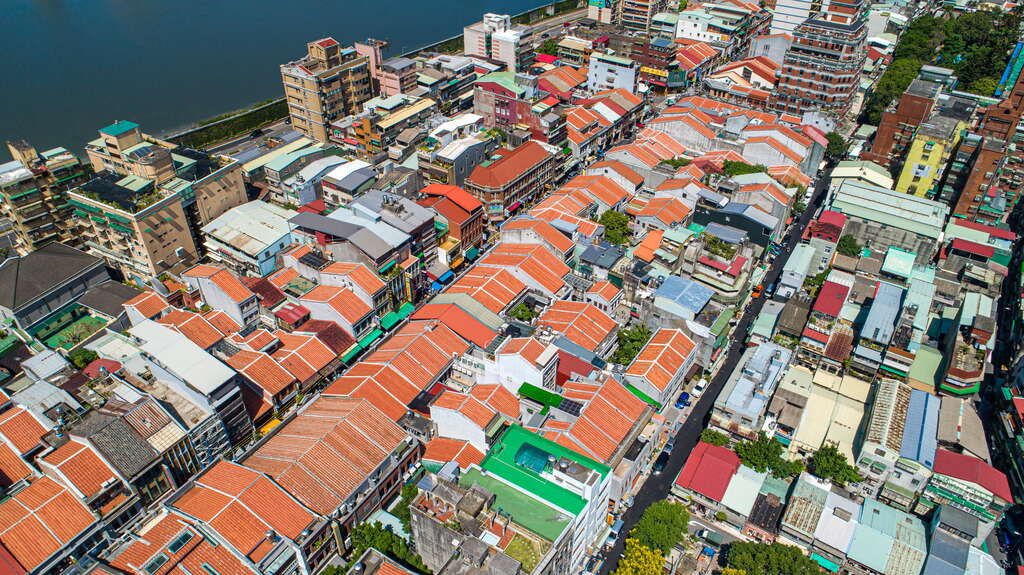
If you are continuing past Japan, Taipei neighborhoods that sit off the usual tourist circuit are a short hop across the East China Sea and use the same MRT-first planning style as this guide.
FAQ
Q: Do I need to speak Japanese to visit Tokyo? A: No. Major tourist areas, restaurants, and transportation have English signs, and station signage is bilingual by default. Google Translate’s camera feature handles menus. Most younger staff in tourist areas speak basic English.
Q: Is Tokyo safe? A: Exceptionally so — it is consistently rated among the safest major cities in the world, and theft, violent crime, and scams targeting tourists are rare. Our safety tips for first-time international travelers cover the ordinary precautions that still apply anywhere.
Q: Should I buy a JR Pass for a Tokyo-only trip? A: No. A 7-day nationwide pass costs far more than any plausible Tokyo-only itinerary. Use an IC card, and add a Tokyo Subway Ticket on heavy sightseeing days. The national pass only enters the conversation when you add long-distance Shinkansen legs like Kyoto, Osaka, or Hiroshima.
Q: What’s the best way to get a SIM or pocket WiFi? A: Buy a tourist SIM at the airport on arrival (IIJmio, Mobal, or a SoftBank visitor SIM), or install an eSIM before you fly — our eSIM comparison ranks the current plans. Pocket WiFi rentals also work and can share across a family’s devices. Japan requires data SIMs; making calls requires a different plan or internet calling apps.
Q: Can I use credit cards in Tokyo? A: Increasingly yes in tourist areas, but Japan is still more cash-heavy than Western countries. Small restaurants, shrines, and traditional establishments are often cash-only. Carry ¥10,000–20,000 (about $65–130) in cash; ATMs at 7-Eleven and Japan Post offices reliably accept foreign cards.
Q: How do I plan my first day if I land jet-lagged? A: Keep it on one line and outdoors. Take the airport express to your hotel, drop bags (or forward them from the airport), and walk one neighborhood — Asakusa or Yanaka near ground level, Shibuya if you want the full sensory hit. Save multi-transfer museum days for day three, when your body clock has caught up.
Related Reading
- First Time International Travel: Complete Beginner’s Guide — everything before the Tokyo-specific stuff
- Hidden Gems in Tokyo — the corners this guide only hints at
- Japan on a Budget — what the same trip actually costs once you leave the hotel
- How to Pack Light: Carry-On Only — skip luggage forwarding entirely
- Ultimate Packing List for International Travel — the full checklist
- Best eSIM for International Travel — data before you land
- How to Avoid Jet Lag — arrive functional
- How to Find Cheap Flights — the fare side of getting there
- Public Transport Hacks for First-Time London Visitors — the same desk, different city
- Travel Etiquette Around the World — Japanese customs in cultural context
- How to Avoid Travel Scams Abroad — rare in Tokyo, useful everywhere
- Best Budget Family Vacations — if the trip grows
- Southeast Asia for First-Timers — extend your Asia trip
- Travel Budget Calculator — run your own numbers

Editorial Team
The Best Travel Guides editorial crew writes every guide on this site under a team byline. Recommendations come from comparing product specs side by side, digging through traveler communities like r/onebag, r/travel, and r/WaltDisneyWorld, and weighing large volumes of verified user reviews. When we cite prices or policies, we link to the official source.

Join the Conversation