Disclosure: This article contains affiliate links. As an Amazon Associate and partner with other affiliate programs, we earn from qualifying purchases at no additional cost to you. We only recommend products we genuinely believe in. Learn more.
Disney World Orlando: The Complete Planning Guide (2026)
Planning a trip to Walt Disney World in Orlando, Florida is equal parts exciting and overwhelming. With four theme parks, two water parks, dozens of resort hotels, and hundreds of attractions, the choices are endless. This guide cuts through the noise with everything you need to plan a memorable, stress-free Disney vacation — including the decision most guides skip: how to split your money between more ticket days and the souvenir haul your kids are already planning.
When Is the Best Time to Visit Disney World?
Timing your visit is the single biggest factor that determines your experience.
- January–February (early): Lowest crowds of the year, cooler temperatures, shorter wait times. Avoid President’s Day weekend.
- May (after spring break, before summer break): Moderate crowds, warm but not scorching, better ticket prices than summer.
- September–early November: One of the best windows. Kids are back in school, crowds drop dramatically, and Mickey’s Not-So-Scary Halloween Party runs on select fall nights (note: it requires a separate event ticket).
- Avoid: Spring Break (late March–April), summer school holidays, Thanksgiving week, and the week between Christmas and New Year — these are the most crowded and expensive periods.
Wait time reality: on a low-crowd day, headliner rides like Tiana’s Bayou Adventure and Guardians of the Galaxy: Cosmic Rewind commonly post waits of 30–50 minutes in the My Disney Experience app. On peak days, those same rides can hit 120+ minutes without a plan.
Disney World Ticket Prices 2026
Disney uses date-based variable pricing, meaning prices change depending on when you visit. Here’s a ballpark overview for planning — always confirm current figures on the Disney website or in our detailed Disney World ticket prices breakdown:
| Ticket Type | Value Days | Regular Days | Peak Days |
|---|---|---|---|
| 1-Day, 1-Park | ~$109 | ~$154 | ~$189 |
| 4-Day, 1-Park/Day | ~$95/day | ~$110/day | ~$125/day |
| Park Hopper Add-On | +$65/day | +$65/day | +$65/day |
Pro tip: Always buy tickets directly from the Disney website or authorized resellers like Undercover Tourist. Never buy secondhand tickets — they’re often non-transferable and can leave you stranded at the gate.
Annual Passes
If you’re visiting more than once a year (or for a longer trip), Annual Passes can offer real savings. The lineup is tiered by access rather than perks:
- Pixie Dust Pass — Florida residents only, the most blockout dates
- Pirate Pass — Florida residents, fewer blockouts
- Sorcerer Pass — Florida residents and Disney Vacation Club members, fewer blockouts still
- Incredi-Pass — no blockout dates, available to everyone, and the priciest tier
Florida-resident tiers cost meaningfully less than the open-to-everyone pass. Check Disney’s official passes page for current pricing before committing.
Ticket Days vs. Souvenir Spending: Where Each Disney Dollar Works Hardest
This is the planning decision families argue about at the wrong time — in the gift shop. Ticket pricing rewards commitment: the per-day cost drops as you add days, so a fifth park day is one of the cheapest “extra” experiences you can buy. Souvenir spending has no such structure; it’s the most elastic line in the whole budget and the easiest one to improvise badly. Decide the split at home, on paper, before anyone smells popcorn on Main Street. Our Travel Budget Calculator is built for exactly this kind of allocation.
The Case for More Ticket Days
- Length discounts are real. Moving from a 3-day to a 4-day or 5-day ticket costs far less per day than the first day did. If you’re already traveling to Orlando, incremental park days are high value per dollar.
- Four parks genuinely need four days. Rushing two parks into one day (possible only with Park Hopper) trades away the slack that makes a Disney trip pleasant.
- Not every day needs a ticket. Disney Springs — the shopping and dining district — has no admission charge, and neither do the resort pools. A mid-trip “down day” makes the remaining ticket days better, not thinner.
The Case for Capping the Souvenir Budget
- Set the number before you travel. Decide a total merchandise budget, split it per kid, and load each share onto a Disney gift card. When the card is empty, the negotiating is over — and the kids, not the parents, do the arithmetic in the store.
- Buy the generic stuff at home. Ponchos, glow wands, autograph books, and basic plush cost more inside the gates than at big-box stores or Disney’s own online shop before your trip. Save in-park money for things you can only get in the parks.
- One meaningful item beats a pile of small ones. A single lightsaber, ear hat, or ornament that commemorates the trip outlives a bag of impulse buys.
- Shop once, deliberately. Nearly every ride exits through a gift shop — that’s by design. Instead of drip-buying at every exit, plan one unhurried souvenir sweep, ideally at Disney Springs on your last day, where the selection is larger and you’re not burning ride time.
When to Shop and When to Ride
Order of operations matters as much as the budget. Morning is the shortest-line window of the day — spend it riding, not shopping. If your crew skips the afternoon parade or the nighttime fireworks, that’s the emptiest the rides will be all day: ride while everyone else watches. Conversely, gift shops are mobbed at park close, when tired families make their final pass — that’s the worst possible time to comparison-shop. The sweet spot for shopping is the mid-afternoon heat or a parade you were skipping anyway: the stores are air-conditioned and calm. And if you’re flying home with a haul, plan your luggage space in advance — see our carry-on luggage guide for bags with expansion room.
The Four Theme Parks — What’s at Each
Magic Kingdom
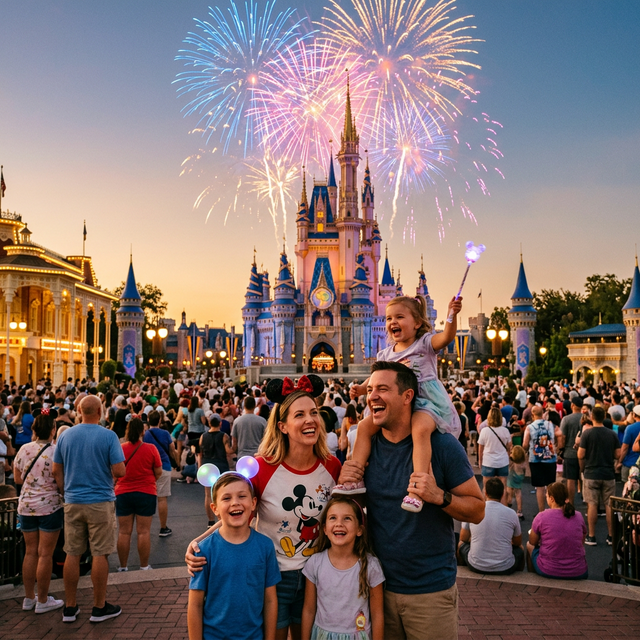
The heart of Disney World. Home to Cinderella Castle, Space Mountain, Haunted Mansion, Pirates of the Caribbean, and the newest addition, Tiana’s Bayou Adventure. Best for: Families with young children, classic Disney atmosphere, parades and fireworks.
EPCOT
A park of two halves — the futuristic World Discovery/World Nature sections and the cultural World Showcase featuring 11 international pavilions. Home to Guardians of the Galaxy: Cosmic Rewind and Remy’s Ratatouille Adventure. Best for: Foodies, adults, cultural experiences.
Hollywood Studios
The most ride-forward park. Star Wars: Galaxy’s Edge (with Rise of the Resistance, one of Disney’s best rides), Toy Story Land, and Tower of Terror. Best for: Teenagers, Star Wars fans, thrill-seekers.
Animal Kingdom
A striking blend of wildlife, conservation, and adventure. Avatar Flight of Passage is consistently rated the park’s best ride. Expedition Everest for coaster fans, real animals at Kilimanjaro Safaris. Best for: Animal lovers, Avatar fans, morning rope-droppers (animals are most active early).
What Order Should You Do the Parks In?
Two schools of thought, both legitimate:
- Magic Kingdom first sets the tone — kids see the castle on day one and the trip feels “real” immediately.
- Magic Kingdom last saves the quintessential experience as a finale, so nothing feels anticlimactic after it. Families who do this often start with a gentler park.
Beyond that, the sequencing follows the parks’ rhythms: Animal Kingdom rewards the earliest start of your trip (animals are most active at open, and it’s naturally a half-plus day — pair it with an evening at Disney Springs). Hollywood Studios deserves a full day, with Rise of the Resistance anchoring your morning plan. EPCOT is the most flexible — it makes a great easy final day, especially during a food or garden festival. Wherever you land, leave a no-ticket day in the middle for the pool; it’s the cheapest crowd-avoidance strategy there is.
How to Use Lightning Lane (Disney’s Skip-the-Line System)
Disney’s old FastPass system is replaced by Lightning Lane:
- Lightning Lane Multi Pass (LLMP): typically ~$24–$35/person/day, varying by park and date. Book multiple single-attraction return times throughout the day.
- Lightning Lane Single Pass (LLSP): additional cost for the biggest rides (like Tiana’s Bayou Adventure). Usually ~$10–$25 per person.
Strategy: booking windows open at 7 AM — about a week ahead for Disney resort guests and a few days ahead for everyone else, so book as early as your window allows. Target the most popular rides first. Then purchase LLSP for one or two bucket-list rides rather than the whole menu.
Where to Stay
On-Property (Disney Resorts)
Staying on-site comes with perks: Early Theme Park Entry (30 minutes before regular opening), complimentary transportation, and the magical “bubble” experience.
| Tier | Examples | Price Range/Night |
|---|---|---|
| Value | All-Star Movies, Pop Century | $130–$250 |
| Moderate | Coronado Springs, Caribbean Beach | $230–$380 |
| Deluxe | Grand Floridian, Polynesian | $500–$1,200+ |
| Disney Springs Area | Hilton, B Resort | $150–$300 (no Disney perks) |
Off-Property
International Drive hotels can be significantly cheaper — think $80–$150/night — but you’ll need a rental car or rideshare to get to the parks. Budget extra for transportation, and note that parking at the theme parks runs $30+/day. If you’re driving the whole way to Orlando, our Road Trip Essentials Checklist covers what’s actually worth packing in the car.
Must-Know Disney World Tips
- Download the My Disney Experience app before you arrive. It’s your hub for mobile orders, Lightning Lane bookings, and real-time wait times. Pair it with one of the power banks from our best portable chargers roundup — all-day navigation and ride photos are hard on a battery.
- Rope drop works. Arriving 30–45 minutes before park opening gets you on 2–3 headliner rides before lines build.
- Eat lunch at 11 AM and dinner at 4:30 PM — beat the peak rush windows and get shorter waits.
- Use mobile ordering at quick-service restaurants. It can save 15–30 minutes per meal.
- Check reservation requirements when buying tickets. Reservation rules for annual passes and some ticket types have shifted in recent years — confirm what your ticket requires before your park day.
- Wear comfortable shoes. You’ll commonly walk 10–15 miles per day. This isn’t an exaggeration.
- Pack a refillable water bottle. Florida heat is real. Free ice water is available at quick-service locations.
Disney World Packing Essentials
- Comfortable, broken-in walking shoes (no new shoes!)
- Lightweight rain poncho (Florida afternoon storms are predictable — and cheaper bought at home)
- Portable phone charger / power bank
- Sunscreen (SPF 50+)
- Small backpack or crossbody bag
- Autograph book if traveling with young kids
- One foldable spare bag for the souvenir haul
How to Save Money at Disney World
Disney is expensive — there’s no getting around it. But smart planning reduces costs significantly:
- Buy multi-day tickets. The per-day cost drops dramatically after day 1.
- Book dining in advance. Table-service restaurants book up 60 days out. Spontaneous sit-down dining rarely works at Disney.
- Stay off-property and drive in. Weigh the hotel savings against parking and a rental car before committing.
- Pack your own snacks. Disney allows outside food (no glass containers or alcohol).
- Visit during low season. January and September have the best value pricing.
- Skip the character dining. At $60–$100+/person, it’s a big spend for what’s essentially a buffet. Parades and meet-and-greets in the park offer the same character time for free.
- Cap souvenirs with a gift card, not willpower. A fixed amount per kid, decided at home, turns the gift shops from a nightly argument into arithmetic.
For fitting Disney into a bigger trip budget, our Travel Budget Calculator walks through the whole exercise, and our travel credit cards comparison covers cards whose perks offset parkings and baggage fees.
FAQ
Q: How many days do I need for Disney World? A: To visit all four parks comfortably (not rushing), plan for 4–5 days. Many families do a week to re-visit favorites and add time for water parks or Disney Springs.
Q: Is Disney World stroller-friendly? A: Extremely. Stroller parking areas exist at every ride. You can rent strollers in the parks for roughly $15–$35/day, or bring your own.
Q: Do I need to book everything in advance? A: Lightning Lane and dining reservations should be booked before arrival. Most rides are walk-up, but popular table-service restaurants book fast.
Q: What’s the best Disney park for first-timers? A: Magic Kingdom — it’s the quintessential Disney experience. Start there, or save it for last as a finale. Either works; splitting the difference doesn’t.
Q: How much should we budget for souvenirs? A: There’s no single right number — the planning-desk answer is that the amount matters less than deciding it before you travel. Put each kid’s share on a gift card, let them manage it, and let the free stuff (characters, parades, pool afternoons) carry the in-between moments.
Q: Can adults enjoy Disney World without kids? A: Absolutely. Adult Disney trips are increasingly popular. EPCOT’s World Showcase and its Food & Wine and Flower & Garden festivals are especially enjoyable for grown-ups.
Related Reading
- Disney World Ticket Prices — detailed price breakdown
- Travel Budget Calculator — plan the ticket-vs-souvenir split
- Best Budget Family Vacations — alternatives if Disney blows the budget
- Best Travel Apps — apps for Disney planning
- Best Travel Credit Cards — perks that offset trip costs
- How to Find Cheap Flights — get to Orlando for less
- Tokyo Travel Guide — if Japan’s theme parks are next on the list

Editorial Team
The Best Travel Guides editorial crew writes every guide on this site under a team byline. Recommendations come from comparing product specs side by side, digging through traveler communities like r/onebag, r/travel, and r/WaltDisneyWorld, and weighing large volumes of verified user reviews. When we cite prices or policies, we link to the official source.
Join the Conversation